Visit Lindor at Pack Expo in Chicago! Learn more here.


Rotary Drum Mixers Explained: Design, Use Cases & Performance

Rotary drum mixers blend powders, granulates, pellets, and other bulk solids using controlled tumbling rather than aggressive mechanical agitation. Because the product is moved primarily by gravity-driven motion, rotary drum mixers can achieve uniform results while minimizing shear, breakage, and fines. They are particularly well suited to fragile or high-value materials and can also combine mixing with processes such as coating, conditioning, soaking, heating, cooling, and drying.
What Is a Rotary Drum Mixer?
Basic Operating Principle
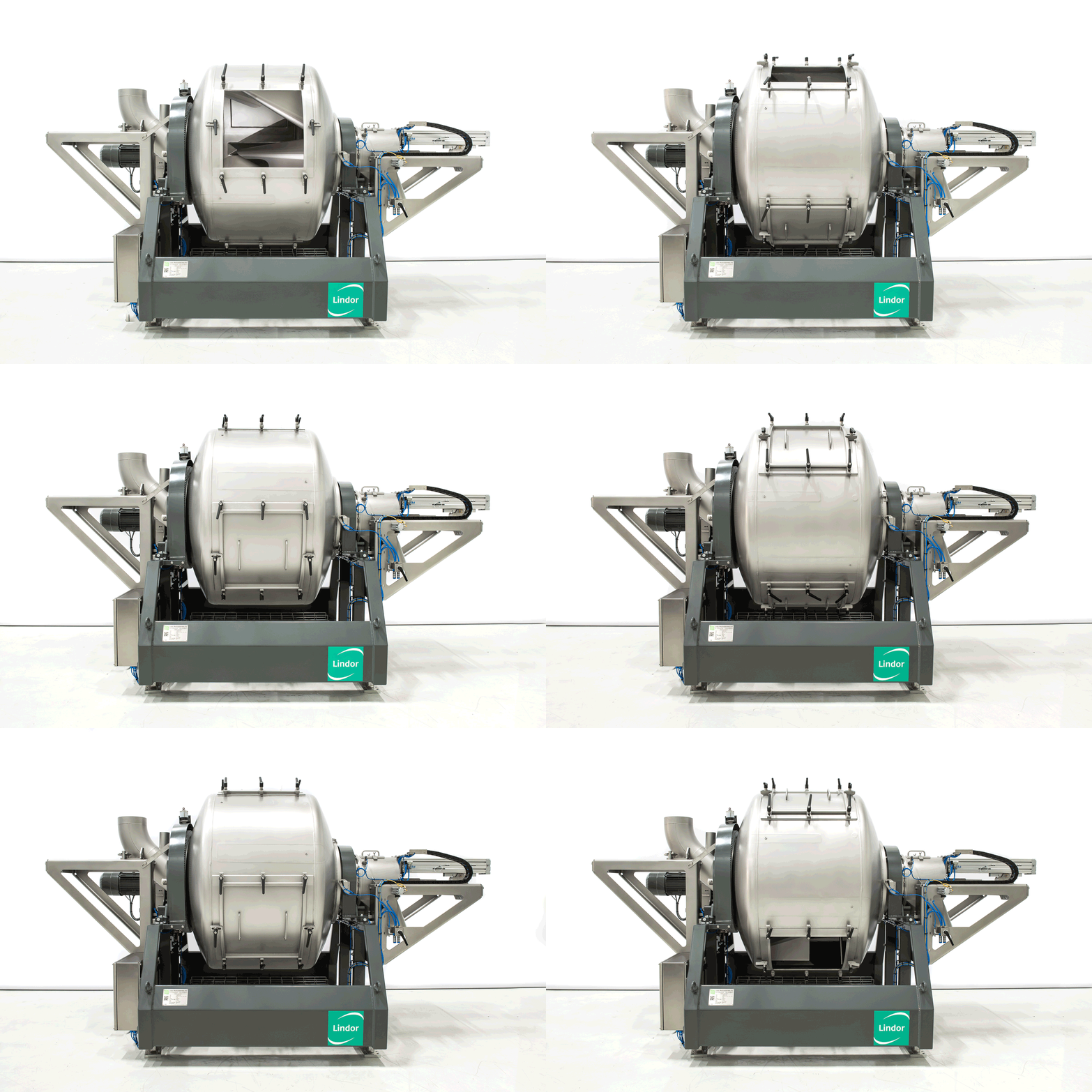
A rotary drum mixer consists of a horizontal drum that rotates around its longitudinal axis. As the drum turns, the product is lifted with the rotating wall before gravity causes it to roll or cascade back through the product bed.
This repeated movement creates continuous redistribution of the particles throughout the drum. Instead of using fast-moving internal agitators to force particles through the mixer, the rotation of the drum itself generates the mixing action.
Rotary drum mixers can operate as either batch or continuous systems.
In a batch process, a defined quantity of material is loaded, processed for a predetermined period, and then discharged. This provides precise control over mixing time and individual batches.
In continuous processing, material enters and leaves the drum continuously. Drum geometry, rotational speed, product characteristics, and throughput determine the determine the residence time and mixing behavior.
Learn More: Continuous Mixing Made Simple
How Mixing Happens in a Rotary Drum
Rolling and Cascading Motion
Mixing performance in a rotary drum depends on the way the product bed moves as the drum rotates.
At appropriate operating conditions, material is carried upward by the drum wall before gravity causes it to roll or cascade back through the bed. This repeated movement exposes particles to different regions of the mixture.
The resulting motion continuously redistributes the product without requiring blades, paddles, or other fast-moving mixing tools inside the product zone.
Rotational speed, drum geometry, fill level, and the properties of the material all influence this behavior. Changing these variables changes both the intensity of particle movement and the rate at which the blend develops.
Uniformity Without High Shear
High mechanical energy is not always necessary to produce a uniform mixture.
In a rotary drum, the repeated movement of the product bed allows particles to change position relative to one another over many rotations. The process can therefore develop a homogeneous blend while maintaining relatively low mechanical stress.
This is particularly valuable when particle size, shape, surface structure, or coatings must remain intact.
The objective is not to eliminate particle interaction. It is to create enough movement for effective mixing while avoiding unnecessary impact, abrasion, or shear.
Learn More: Gentle Mixing Technology
How Rotary Drum Design Supports Consistent Performance
The performance of a rotary drum mixer is shaped by how the equipment is configured around the material and process requirements. Drum geometry, rotational speed, and product infeed and discharge all work together to create controlled product movement and repeatable processing conditions.
Drum Geometry for Controlled Product Movement
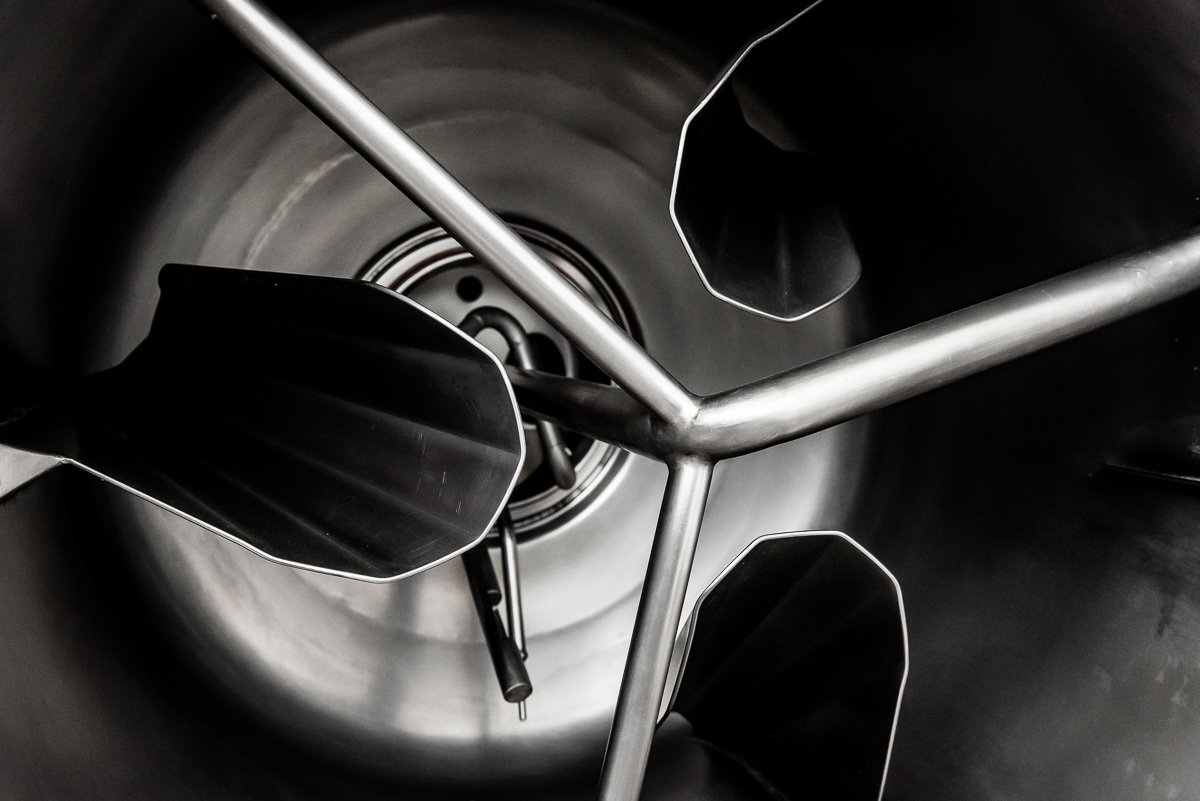
The dimensions and geometry of the drum help determine how material moves during mixing. As the drum rotates, particles are lifted by scoops and redistributed through a controlled rolling and cascading motion.
Key design parameters include:
- drum diameter and length
- scoop design
- operating fill level
- product characteristics
The relationship between drum geometry and fill level creates the space required for material to move through the product bed. This allows particles to continuously change position relative to one another, supporting uniform mixing without the need for aggressive mechanical agitation.
Drum dimensions can be selected according to the required batch size or throughput while maintaining the product movement needed for the application.
Speed and Process Control
Rotational speed provides another way to control material movement inside the drum. Adjustable speed allows the mixing action to be matched to the characteristics of the product and the desired process result.
Speed control can be used to optimize:
- mixing intensity
- particle movement
- residence or mixing time
- gentle product handling
- process repeatability
Together with the drum geometry and fill level, rotational speed helps establish predictable processing conditions.
Once the appropriate parameters have been determined, they can be reproduced from one production run to the next, supporting consistent product quality and reliable process performance.
Efficient Product Infeed and Discharge
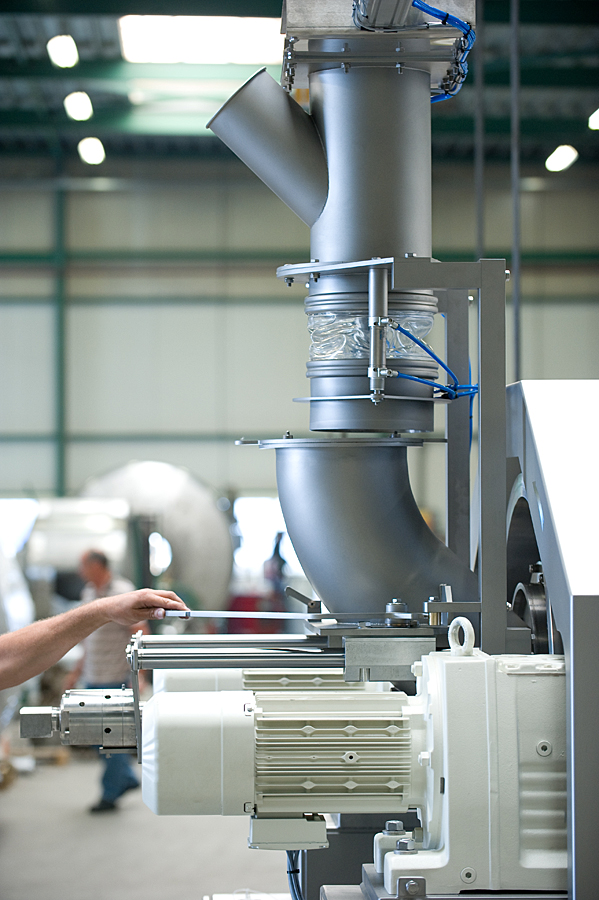
Inlet and outlet systems are designed to move material efficiently into and out of the drum while supporting the requirements of the overall process.
Depending on the application, these systems can be configured for:
- controlled product feeding
- efficient and complete discharge
- dust containment
- hygienic processing
- easy cleaning and product changeovers
- integration with upstream and downstream equipment
Efficient discharge also helps minimize product remaining inside the system after processing, supporting high product recovery and straightforward cleanout between batches.
For applications with specific containment, hygiene, or automation requirements, inlet and outlet configurations can be adapted as part of the overall rotary drum system design.
Rotary Drum Mixers vs Other Mixing Technologies
Drum Mixer vs Ribbon Blender
Ribbon blenders use a rotating agitator with inner and outer ribbons to move material in different directions through a stationary vessel. This can provide effective and relatively fast blending for many powders.
Rotary drum mixers use a different principle. The vessel itself rotates, allowing gravity to move the material through the product bed.
The appropriate technology therefore depends on the process objective.
A rotary drum mixer may be preferable when:
- particle integrity is important
- the material is susceptible to breakage or attrition
- low shear is required
- internal obstructions should be minimized
- easy access or cleaning is a priority
- additional processing steps need to be integrated
A ribbon blender may be more appropriate when the material can tolerate greater mechanical interaction and the process benefits from active agitation.
Drum Mixer vs Plow or Paddle Mixers
Plow and paddle mixers use internal mixing tools to actively move material. Depending on their design and operating speed, they can create more intensive particle movement and may be effective for cohesive products or applications requiring rapid dispersion.
The trade-off is that greater mechanical intensity can increase particle impact, abrasion, equipment wear, or heat generation.
Rotary drum systems are generally better suited to applications where maintaining product integrity is a primary objective. Plow or paddle technologies may be more appropriate when intensive dispersion, deagglomeration, or other higher-energy processing is required.
The best choice therefore depends on the material and process objective rather than one mixer technology being universally superior.
Where Rotary Drum Mixers Excel
Powders and Bulk Solids
Rotary drum mixers can process a wide range of free-flowing powders, granulates, pellets, and other bulk solids.
Typical objectives include:
- creating uniform blends
- distributing minor ingredients
- maintaining particle integrity
- conditioning materials
- preparing products for downstream processing
The combination of controlled particle movement and relatively low mechanical stress makes rotary drum mixing applicable across food, chemical, polymer, pharmaceutical, and other powder-processing industries.
Fragile and High-Value Materials
Some materials can technically be mixed in many different types of equipment, but product damage determines whether the process is economically successful.
Rotary drums are particularly useful for products such as:
- polymer pellets and granulates
- coated particles
- tea leaves, seeds and agricultural materials
- specialty food ingredients
- catalyst carriers
- battery and specialty chemical powders
- other high-value, abrasive, temperature-sensitive or breakage-sensitive materials
For these products, reducing fines, abrasion, coating damage, or particle fracture can directly improve usable yield and downstream performance.
Coating, Conditioning, and Soaking
A rotary drum does not have to be limited to completely dry blending.
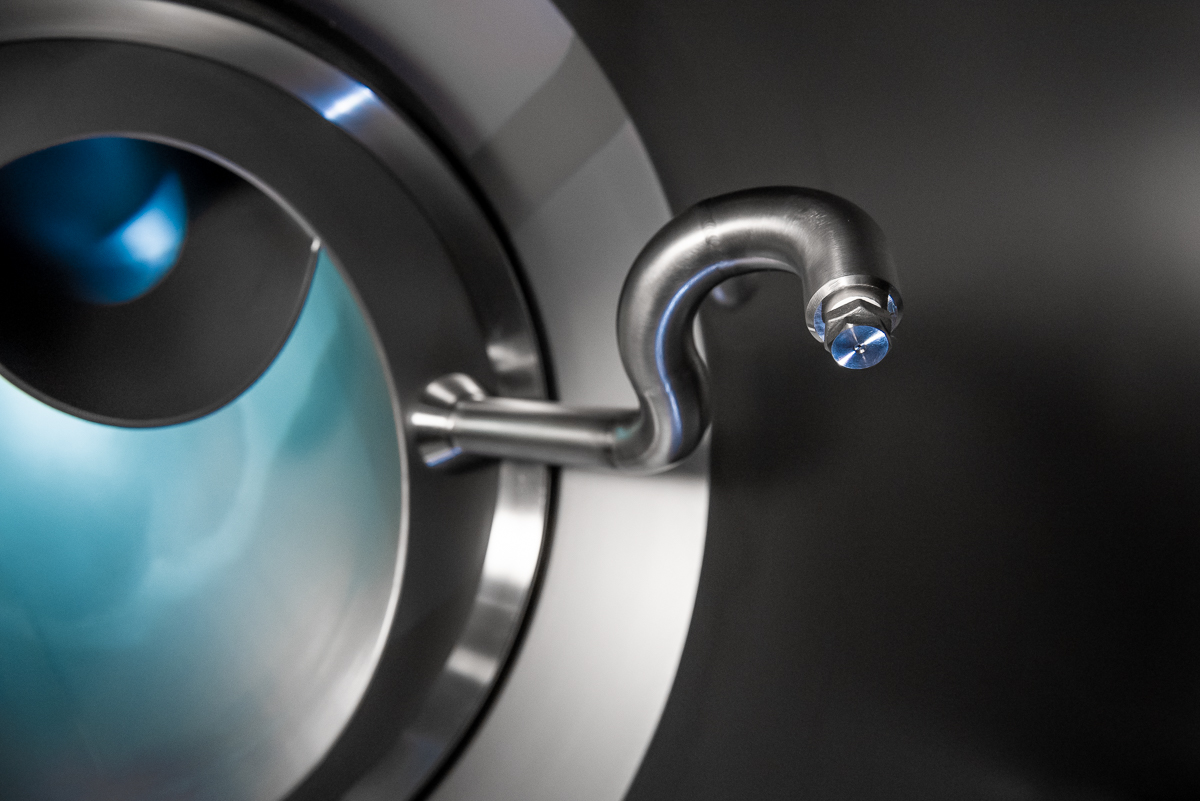
The controlled movement of particles through the drum can provide a suitable environment for applying a precise amount of liquids to powders, granulates, or pellets. Spray systems can introduce liquids while the tumbling action repeatedly exposes different particle surfaces.
This principle can be used for:
- liquid coating
- impregnation
- soaking
- conditioning
- flavor or additive application
Process parameters such as liquid addition rate, residence time, temperature, and rotational speed can be controlled according to the application.
Customizing a Rotary Drum System
Configuration for Product-Specific Behavior
Bulk solids do not all behave in the same way.
Particle size, density, shape, flowability, moisture content, surface properties, and fragility can all influence how a product moves through a rotary drum. A configuration that performs well with one powder may therefore require different operating parameters for another.
A rotary drum system can be configured around factors such as:
- required batch size or throughput
- rotational speed
- residence time
- inlet and outlet configuration
- sealing requirements
- discharge behavior
- cleaning requirements
The objective is to match the equipment and operating conditions to the physical behavior of the product rather than force every material through the same process.
Integrated Process Functions
One of the advantages of rotary drum technology is the ability to combine mixing with additional processing operations.
Depending on the application, a system may incorporate:
- liquid injection or spraying
- coating
- impregnation or soaking
- heating or cooling
- air drying
- vacuum drying
- controlled atmosphere processing
- temperature-controlled drum surfaces
Combining operations in one system can reduce product transfers between pieces of equipment and simplify the overall process.
For sensitive materials, fewer transfers may also reduce opportunities for product damage, contamination, or loss.
How to Choose a Rotary Drum Mixer
Decision Checklist
A rotary drum mixer should be selected based on the behavior of the product and the required process result.
Key questions include:
- Is the material fragile? Consider how much breakage, attrition, or abrasion the product can tolerate.
- Is segregation a concern? Evaluate differences in particle size, shape, and density.
- What level of uniformity is required? Define the acceptable blend specification.
- What throughput is required? Determine whether batch or continuous processing is more appropriate.
- Are liquids being added? Consider whether coating, soaking, or conditioning needs to occur during mixing.
- Does temperature need to be controlled? Heating, cooling, or drying requirements may influence the system configuration.
- How important is cleanability? Consider changeovers, contamination risks, and hygiene requirements.
- How will the mixer integrate with the rest of the process? Inlet, discharge, feeding, and downstream equipment should be considered from the start.
The answers help determine whether rotary drum mixing is appropriate and how the system should be configured.
Discover: Lindor’s Range of Rotary Mixers
Testing and Validation
Why Pilot Testing Matters
Powder and bulk-solid behavior can be difficult to predict from specifications alone.
Two materials with similar particle sizes may behave very differently because of differences in density, surface characteristics, moisture, electrostatic behavior, or formulation.
Testing the actual product provides a more reliable basis for equipment selection and scale-up.
A trial can determine whether the desired result can be achieved while establishing the operating conditions needed to reproduce it.
What to Measure in a Drum Mixer Trial
The appropriate measurements depend on the process objective, but a rotary drum mixing trial may evaluate:
- blend homogeneity
- particle breakage
- fines and dust generation
- coating distribution and coverage
- residence or mixing time
- product temperature
- discharge behavior
- throughput
- cleanability
- repeatability
For coating, drying, or conditioning applications, additional parameters such as moisture content, liquid distribution, temperature profile, or drying performance may also be measured.
Testing these factors helps identify suitable process parameters before moving to production scale.
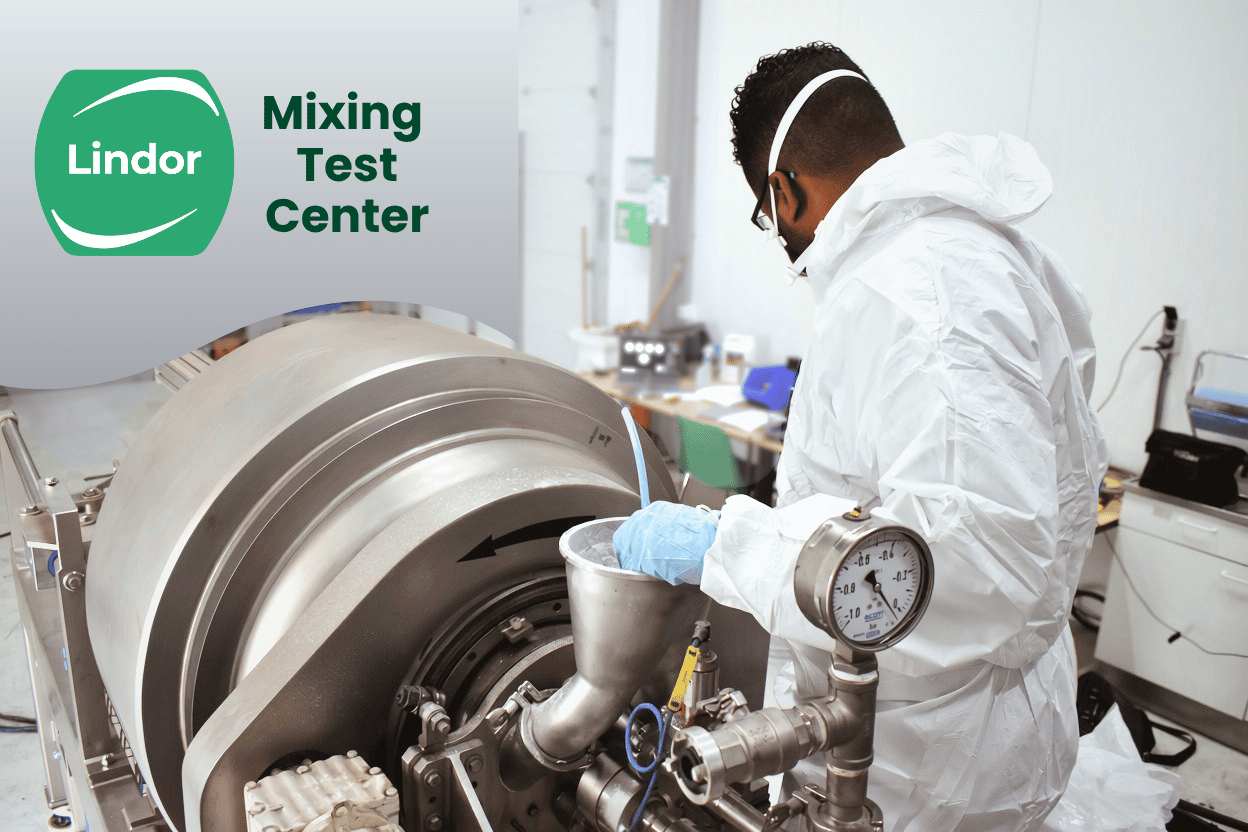
Discover: Lindor Mixing Test Center
Engineer's Summary
Rotary drum mixers use controlled, gravity-driven tumbling to blend powders, granulates, pellets, and other bulk solids. Because the product moves without fast-moving internal agitators, rotary drum technology can achieve uniform mixing while minimizing shear, impact, breakage, and fines.
The technology is particularly suited to fragile and high-value materials, but its capabilities extend beyond blending. Coating, conditioning, soaking, heating, cooling, and drying can also be integrated into a rotary drum process.
Performance depends on the interaction between drum geometry, fill level, rotational speed, residence time, and the physical characteristics of the product. For this reason, selecting and configuring a rotary drum mixer should begin with the material and desired process result and, where possible, be validated through testing.
Ready to Discover Rotary Drum Mixing?


Get Personal Advice Today
Our expert engineers are ready to discuss your requirements.